Final inspection tells you what went wrong. In-line control is what stops it happening. Our QC technicians sit on the production floor from fabric receipt to carton sealing — five control points, not one.
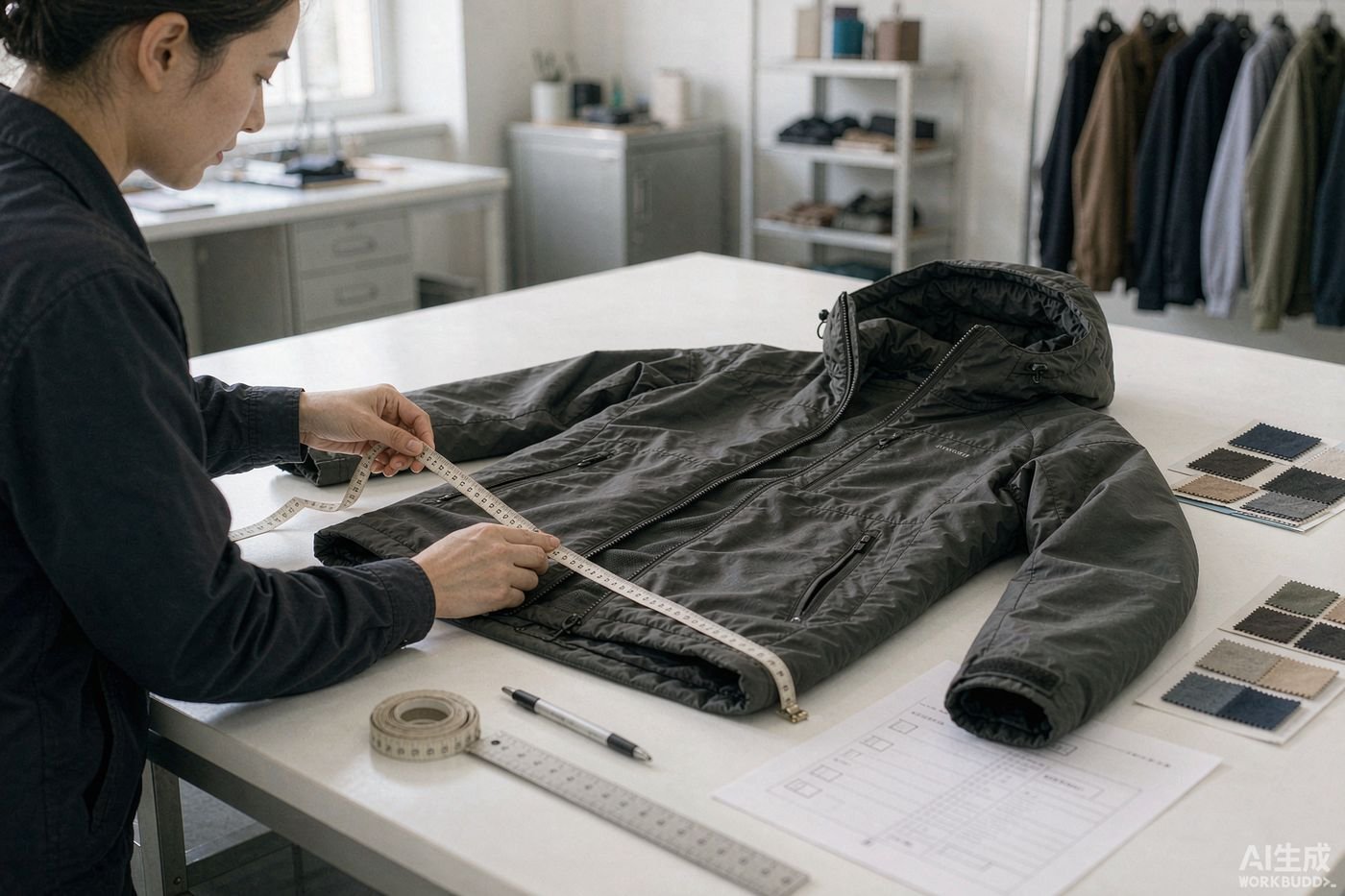
We inspect to AQL 2.5 for major defects and AQL 4.0 for minor defects, with a zero-tolerance critical list. If your buyer specifies a different standard, we inspect to theirs.
| Class | Definition | Examples | AQL |
|---|---|---|---|
| Critical | Unsafe, illegal, or unsellable | Needle or metal fragment, broken zip mechanism, incorrect size label on retail-ready pack | 0.0 |
| Major | Visible defect a customer would return | Open seam, skipped stitch, measurement outside tolerance, wrong shade panel, misaligned placket | 2.5 |
| Minor | Noticeable but not return-worthy | Loose thread over 10 mm, slight puckering, minor label placement drift | 4.0 |
| Workmanship standard | Approved per style at sampling | Seam type, stitch density (SPI), tolerance chart and finish definition locked into the order file | — |
| Measurement tolerance | Typically ±1.0 cm on body, tighter on trim | Confirmed against your spec sheet at sealed sample approval | ±1.0 cm |
Some tests we run in-house every batch. Others go to accredited third-party labs when your buyer or market requires an official report.
Buyers' compliance teams ask for evidence, not logos. Current certificates and audit reports are available on request, with scope, issuing body and expiry date clearly stated.
Quality management system, certified by an accredited body. Scope covers pattern development, manufacturing and inspection.
Social compliance audits covering working hours, wages, health and safety, and freedom of association. Reports shareable via the platform.
Tested for harmful substances at the fabric level for our main performance qualities. Certificate number supplied to buyers.
Certified recycled polyester and recycled nylon sources with transaction certificates traceable to your order.
Responsible production certification covering labour practices, environment and security standards.
Restricted substance compliance for EU and US markets, verified by third-party lab reports per bulk order.
Before publishing: list only certifications this facility genuinely holds, and keep scope and expiry dates accurate. Publishing a certification you do not hold is a legal and commercial risk in most export markets.
Social compliance is not a document we produce for audits. It is the reason buyers who visit come back, and the reason we can keep skilled machinists when the industry around us cannot.
Written contracts, statutory wages paid on time, social insurance, no forced overtime, and a worker committee that meets monthly.
Ventilation and dust control, machine guarding, first-aid trained staff on each floor, and documented fire drills.
Recycled polyester and nylon, organic cotton, TENCEL™ Lyocell, and C0 DWR finishing that avoids PFCs.
Fabric offcut collection for recycling, packaging reduction, and LED conversion across the production floor.
Buyers' compliance teams can request current certificate scans, audit reports and test reports directly. We aim to answer within two working days.
If your buyer needs a specific certificate, a specific test, or a specific audit standard, tell us early. It is much cheaper to plan for it than to discover it at shipping.